The French toast recipe is one of the most timeless and dependable breakfast dishes enjoyed across Canada and, to a large extent, the United States. Known for its comforting warmth, rich custard flavour, and ease of preparation, French toast has become a staple in Canadian homes, cafés, and weekend brunch tables. Its ability to transform basic pantry ingredients into a satisfying homemade meal makes it especially appealing to families, students, and home cooks seeking simple yet rewarding recipes.
Why the French Toast Recipe Is So Popular in Canada
The enduring popularity of the French toast recipe in Canada is rooted in practicality, tradition, and comfort. Canadian households place strong value on recipes that minimize waste, rely on affordable ingredients, and deliver consistent results. French toast fulfills all of these expectations.
Bread, eggs, and milk are foundational items in most Canadian kitchens. French toast offers an efficient way to use day-old or slightly stale bread that might otherwise be discarded. This aligns closely with Canada’s long-standing culture of mindful food use and home-based cooking.
Climate also plays a role. During colder months, warm breakfasts are preferred, and French toast provides both energy and comfort. In warmer seasons, it adapts easily to lighter toppings such as fresh berries or yogurt. This year-round flexibility explains why searches for French toast recipe remain strong across all Canadian provinces and continue to perform well in the USA.
What Defines a Canadian-Style French Toast Recipe
A Canadian-style French toast recipe emphasizes balance rather than excess. Instead of heavy cream, excessive sugar, or overly rich batters, this approach focuses on:
- A soft, custardy interior
- Lightly crisp, evenly browned edges
- Moderate sweetness that pairs well with maple syrup
- Reliable cooking on standard stovetops
The result is French toast that feels indulgent yet appropriate for regular breakfasts. It complements Canadian maple syrup naturally and does not overwhelm the palate.
Ingredients for French Toast Recipe (Cups and Metric Equivalents)
This French toast recipe uses widely available ingredients found in Canadian grocery stores. Measurements are provided using familiar North American standards.
Main Ingredients
- Thick-sliced bread, slightly stale: 6 slices (approximately 300 g)
- Large eggs: 3
- Milk (2% or whole): 3/4 cup (180 ml)
- Granulated sugar: 1 tablespoon (12 g)
- Pure vanilla extract: 1 teaspoon (5 ml)
- Ground cinnamon: 1/2 teaspoon (1.5 g)
- Fine salt: 1/4 teaspoon (1.5 g)
- Butter or neutral oil for cooking: 2 tablespoons (28 g)
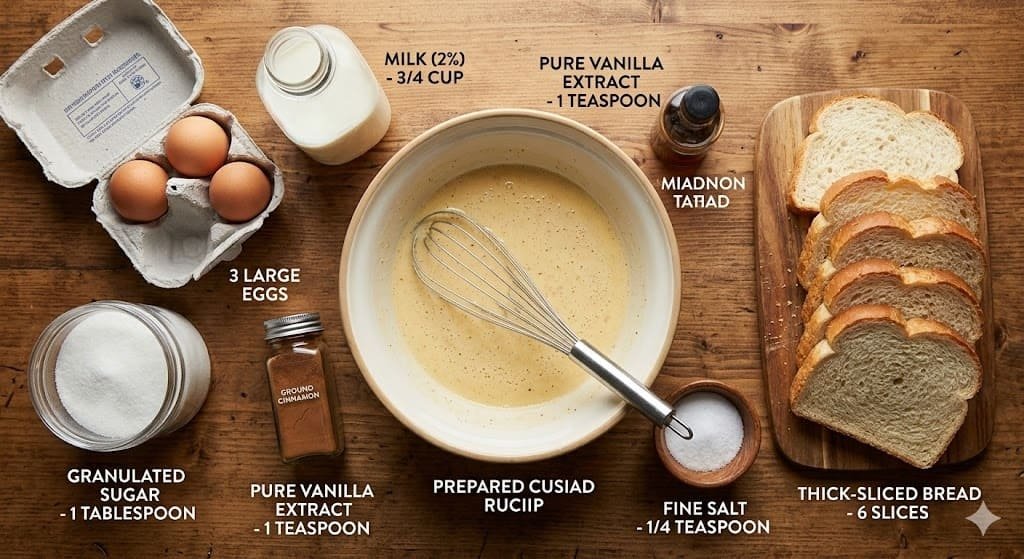
Optional flavour additions such as nutmeg or citrus zest may be used but are not required for the core French toast recipe.
Choosing the Best Bread for French Toast Recipe
Bread selection directly affects texture and flavour. Slightly stale bread absorbs custard more evenly without collapsing.
Common bread choices in Canada include:
- White sandwich bread for a classic texture
- Brioche or challah for richer French toast
- Whole wheat or multigrain for added fibre
Thicker slices are recommended, as they maintain structure during soaking and cooking.
Alternatives
- Popeyes
- A&W
- Mary Browns
- Harveys
- Arby’s Menu
- Second Cup Café Menu with Prices in Canada
- Starbucks Canada Menu – Full Coffee, Drinks & Breakfast Menu in Canada
Step-by-Step French Toast Recipe Instructions
This French toast recipe is designed for clarity and ease, making it suitable for beginners and experienced cooks alike.
Step 1: Prepare the Custard
In a shallow bowl, whisk together eggs, milk, sugar, vanilla, cinnamon, and salt until smooth and fully combined.
Step 2: Heat the Cooking Surface
Place a non-stick skillet or griddle over medium heat. Add a small amount of butter or oil and allow it to melt evenly.
Step 3: Soak the Bread
Dip each slice of bread into the custard mixture, allowing it to soak briefly on both sides. Avoid prolonged soaking to prevent sogginess.
Step 4: Cook the French Toast
Transfer soaked bread to the hot pan. Cook for 2–3 minutes per side, or until golden brown and cooked through.
Step 5: Serve Hot
Serve immediately with preferred toppings.
Cooking Science Behind a Perfect French Toast Recipe
French toast relies on simple but precise cooking science.
Egg Protein Coagulation
Egg proteins begin setting at moderate heat. Gentle cooking allows the custard to set evenly, producing a creamy interior without raw egg flavour.
Bread Absorption
Stale bread absorbs liquid efficiently while maintaining structure. Fresh bread contains too much surface moisture, which can result in soggy French toast.
Browning Reactions
Butter and sugar promote browning through caramelization and the Maillard reaction, contributing flavour and colour.

Nutrition Information (Per Serving Approximate)
Nutritional values vary based on bread type and toppings.
- Calories: 260–300 kcal
- Carbohydrates: 30–35 g
- Protein: 10–12 g
- Fat: 10–12 g
- Saturated Fat: 4–5 g
- Sugars: 6–8 g
- Sodium: 300–350 mg
When paired with fruit or yogurt, French toast can form part of a balanced breakfast.
Why French Toast Is Easy to Prepare at Home
The French toast recipe requires minimal equipment, no advanced techniques, and short preparation time. Most kitchens already contain all necessary tools and ingredients.
Total preparation and cooking time typically remains under 20 minutes, making French toast practical for busy households.
French Toast and Canadian Maple Syrup
In Canada, French toast is closely associated with maple syrup. The natural sweetness and depth of flavour provided by Canadian maple syrup complements the custard base without overpowering it.
This pairing is especially popular during maple syrup season and contributes to the dish’s cultural identity.
Storage, Reheating, and Meal Prep
Refrigeration
Cooked French toast can be stored in an airtight container in the refrigerator for up to 3 days.
Freezing
French toast freezes well. Cool completely, freeze in a single layer, then store in freezer-safe bags for up to 2 months.
Reheating
Reheat in a toaster, oven, or skillet for best texture.
French Toast Recipe Variations
Classic Canadian French Toast
Serve with butter and maple syrup.
Health-Conscious French Toast
Use whole wheat bread and reduce added sugar.
Dairy-Free French Toast
Substitute plant-based milk and oil.
Baked French Toast
Prepare in a baking dish for larger groups.
Common Mistakes to Avoid
- Using overly fresh bread
- Oversoaking slices
- Cooking on high heat
- Skipping seasoning
Expanded Frequently Asked Questions
French Toast in Canadian and American Food Culture
In Canada, French toast is most often associated with home cooking and weekend breakfasts. In the United States, it is also a staple of diners and brunch menus. This shared cultural relevance contributes to its lasting popularity across North America.
Final Thoughts
This French toast recipe provides a comprehensive, Canadian-focused resource designed for long-term relevance and search visibility. By combining clear instructions, cooking science, nutrition insights, practical storage guidance, and expanded FAQs, it delivers reliable value to readers in Canada and the United States. The French toast recipe remains a classic example of how simple ingredients, when used thoughtfully, can create comforting and dependable homemade food.